Choosing running shoes can be a nightmare these days because there are hundreds of models from all brands and each one claims to have a new supertechnology that will make you run better or with less risk of injury. So how do you know which shoes work for you?
It's a complicated topic. There are theories about everything and people defending (even from scientific standpoints) everything from barefoot running to the new trend of shoes with extra cushioning layers, passing through the minimalist trend and "normal" shoes. It's an entire discussion that won't end anytime soon. Everyone has their preference and if you want to try different options there's no problem, after all no one has the absolute truth on this topic. But our recommendation, especially if you're just starting out, is that you buy running shoes appropriate to your foot type and gait following these tips:
Try them on in the afternoon because your foot swells during the day and when you run.
Try them on with the socks you'll wear while running (they're usually thinner than regular cotton socks).
Try them on both feet because sometimes one is longer than the other and if you didn't notice you'll have problems later.
They shouldn't feel tight. You should be able to fit your index finger between the end of your longest toe (not always the big toe) and the tip of the shoe. Your toes should have room to move. Also you shouldn't feel them squeezing in the middle of your foot (where the laces are), but also not feel your foot sliding side to side.
The shoes should feel comfortable from the moment you put them on. THIS IS KEY. If the shoe doesn't fit you in the store it won't fit you when you run (don't believe that shoes "break in" over time). If possible run a little with the shoes in the store (specialized stores have treadmills so you can run).
Choose shoes appropriate for your foot type and gait.
To know which shoes are appropriate for your foot type and gait go to a specialized store like Newton, Brooks, On the Road, Runners or Adidas at Multiplaza Escazú. All of them have trained staff who will test your gait and foot type and based on that will recommend which type of shoe best suits your profile. Once you know the type of shoe that works for you try several models from different brands to see which one fits you best.
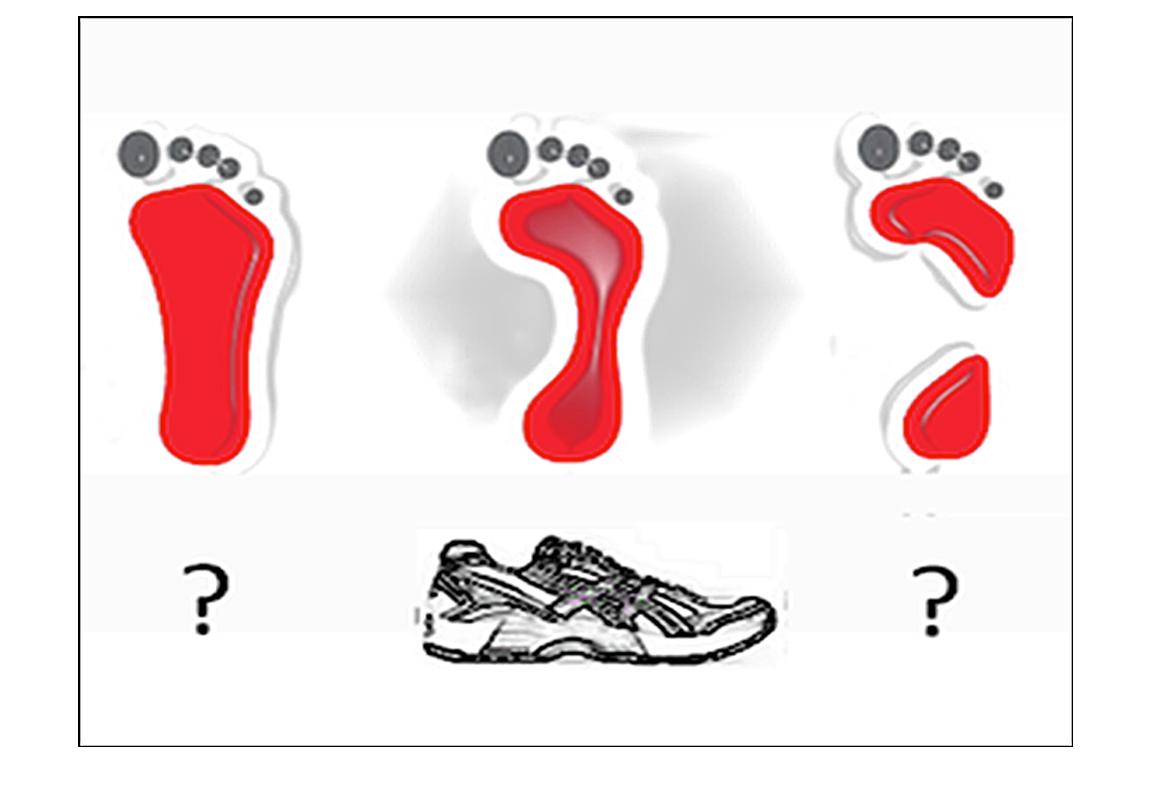
In summary, this "gait type" refers to the angle at which your foot lands when it touches the ground. There are three angles:
If you have a flat foot and when you run you put your body weight on the inside of your foot (below the arch) and push off practically with your big toe you are an overpronator. The shoes that work for you are motion control or stability shoes because they provide support to the inside of your foot and help stabilize your body during the push-off phase.
If you have a high arch and when you run you put your body weight on the outside of your foot, pushing off practically with your small toes, you are a supinator. You should buy shoes with good cushioning or neutral shoes.
If you have a normal arch (neither very flat nor very high) and you put your body weight slightly toward the inside of your foot, distributing the push-off force evenly among all your toes, you are a pronator "normal". It's said you have a "neutral" gait and you can buy several types of shoes because your injury risk is lower, but neutral shoes with some stability or cushioning work well for you.
There are other factors that determine the type of shoe you should buy, such as a person's weight, previous injuries or different morphological alterations or gait mechanics unique to each person. That's why we insist that the best thing you can do is go to a specialized store so they can analyze your foot and gait. This evaluation is free and will tell you which shoes work best for you.
But the golden rule is that the shoes feel comfortable from the moment you put them on and walk with them around the store. The feeling of comfort is a good indicator that those shoes suit your characteristics.
Sources: Runners World; Tim Noakes (2004), Lore of Running