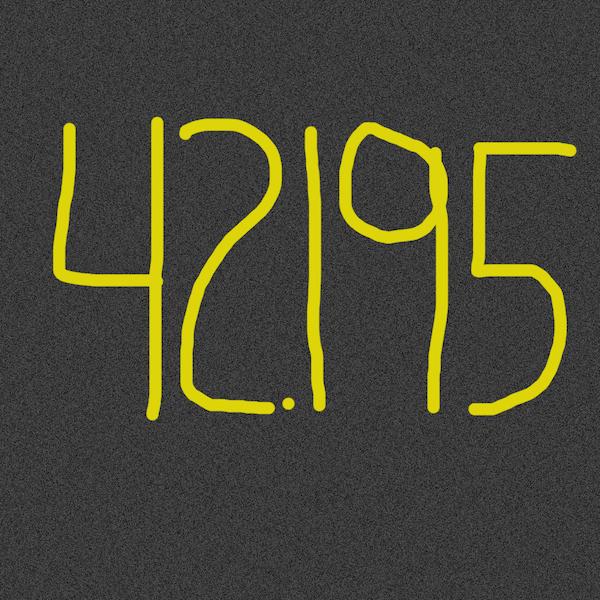
The marathon is the crown jewel of athletics. It is the distance that everyone aspires to run at some point in their life. It is forty-two thousand one hundred ninety-five meters of sweat, pain, and effort that end with a sense of achievement and personal satisfaction rarely matched by any other athletic event.
Imagine that less than 1% of the world's population will finish a marathon in their lifetime. Simply belonging to that small percentage is a great goal worth striving for. More and more people are voluntarily taking on the challenge of training to cover the ultimate distance. In the United States (the country that keeps the best statistics) only 25,000 people finished a marathon in 1976. In 2014 there were 550,000!
And why that distance? Legend has it that a Greek messenger named Pheidipides ran approximately 40 kilometers between the city of Marathon and Athens to communicate the victory in the battle against the Persians. The story has several quite different versions but we won't get into the debate; the point is that for the first modern Olympic Games, those in Athens 1896, the race called Marathon was held for the first time. That first time the distance was approximately 40 kilometers and in subsequent Olympics the distance varied between 40 and 42 kilometers according to the organizers' whims. It wasn't until 1921 that the IAAF established the official distance of 42.195 kilometers, which is what had been measured for the London 1908 Olympic Games.
Another reason that makes the distance striking is that physiologically the human body can store enough glycogen (the main source of energy when running) to run approximately 32 kilometers. At that point reserves reach their minimum and the athlete experiences what is popularly called "hitting the wall," described as a sensation of total weakness and disorientation that makes it impossible to continue. While training and good nutrition before and during the race can prevent "hitting the wall," the physical and mental challenge of finishing a marathon will always be enormous.
That personal challenge, that psychological aspect of self-improvement, of "I can do it," of overcoming yourself and achieving the satisfaction of crossing the finish line after forty-some kilometers on foot is the only way to explain why every year hundreds of thousands of people around the world are crazy enough to sign up for a marathon. We can't give you many more reasons.
In Costa Rica the passion for the marathon is great. Thousands of Costa Ricans go out every year to run the major marathons of the world. Just at the Chicago Marathon last year there were 447 Ticos. A few weeks ago registration opened for the new Correcaminos Marathon, which will be in July, and practically all 1,000 available spots are already sold out.
If you have already run a marathon you know well what we're talking about. If you haven't run it yet… don't you want to discover what it feels like?