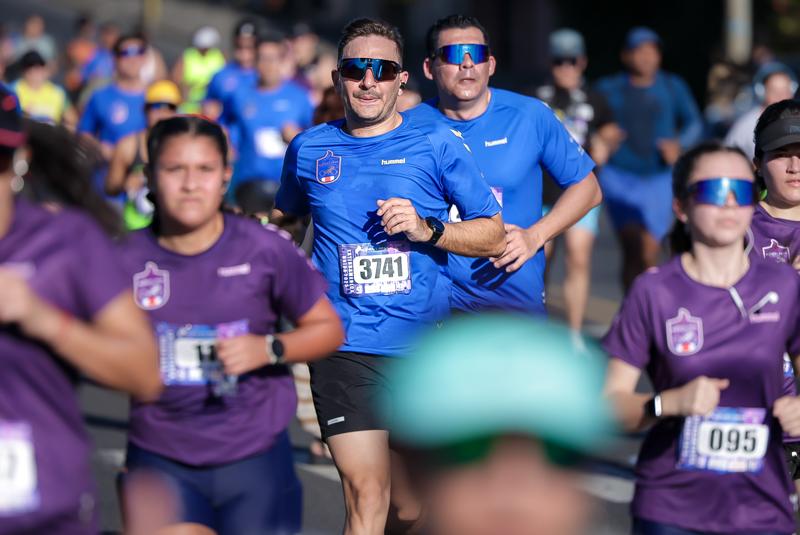
Approximately half of runners get injured over the course of a year—HALF! Some studies have even mentioned injury incidence rates as high as 80% among runners, though the data varies widely depending on the research. The causes are many and sometimes difficult to identify, not only because of the wide variety of habits among runners and the factors that can affect them, but also because each person is different and will respond differently to each stimulus.
However, there are some common habits among runners that drastically increase the probability of getting injured. We can't promise you won't get injured, but if you want to reduce the chances of that happening, avoid these three mistakes:
1. Increasing training load too quickly. Training is an adaptation. You run—your body suffers small damage—your body recovers from that damage by becoming stronger than it was, and the cycle repeats. Each time you'll be able to run more distance or faster because your body will keep adapting as long as you feed it well and give it the rest it needs to recover from the damage. One of the most common causes of injury is training too much without giving your body a chance to adapt, so those small damages turn into big ones until the pain in your knee, the sole of your foot, or wherever it is no longer lets you run.
Solution: Increase your training load progressively. A safe rule is not to increase more than 10% of your total weekly volume from one week to the next. That is, if you ran 30 kilometers this week, don't run more than 33 kilometers next week, and so on.Another solution: get yourself a competent coach—they'll know well how to advance you in the process without putting you at greater risk.
2. Running in worn-out shoes. The issue of pronation, supination, and your foot type isn't just talk from specialized running stores; it's important information so you run in shoes that fit your form and your style (not your fashion style, of course, but your running style). It's not a foolproof formula by any means, but running in shoes recommended for your foot strike type will reduce the chances of getting injured. Not to mention if you're still running in your old soccer or gardening shoes—it's time to upgrade!
Solution: Listen to those who know and get yourself some shoes that fit your foot strike and foot type. Also keep in mind that all shoes have a useful life after which the cushioning, shape, and other factors lose their original characteristics. This varies depending on the model, the person's weight, the terrain you run on, and how each person runs, but in general a good pair of shoes will last between 400 and 800 kilometers in good condition.
3. Activities outside of running. I've lost count of how many people have told me they got injured playing pickup soccer, and many of those people have suffered injuries (mainly to the knee) that have kept them from running for months or years. It's not that running should be your only sport—on the contrary, it's recommended to practice other sports to work a greater number of muscles that don't get worked when we run. But there are sports with much higher risk, and soccer is one of them. If the sport requires sudden cuts, the risk of injury will be greater. If the sport is performed poorly, like bad form when lifting weights or doing Crossfit, for example, the risk of injury will also be much greater.
Solution: If you're serious about running, take a break from pickup soccer games at least until you complete that marathon you'd so like to do. Practice swimming, yoga, cycling, pilates, weightlifting, or other sports that don't carry as much risk.